
Your dinner contains over 10,000 volatile compounds. You have maybe fifteen words for them.
A new sensory and behavioral science platform and the research partnership behind it are trying to close that gap.
English evolved to describe the visible world. It never caught up with the mouth.
Linguists have measured this. Asked to name a smell, English speakers take about five times longer than they take to name a color, and they misidentify everyday odors — coffee, banana, chocolate — roughly half the time. The nose does its job. The words run out.
This deficit is cultural. Speakers of Jahai, in the Malay Peninsula, name odors as fast and as consistently as they name colors, using a dozen abstract smell terms that work the way "blue" and "green" work for sight. A vocabulary for flavor is possible. The problem is most of us never learned.
So when you try to explain what you actually want to eat — to a partner, a restaurant, a nutritionist, yourself — you land on "savory," "rich," "kind of umami but not in a weird way." The instruments were never built for the job.
Today, the World Taste & Smell Association and Singapore-based Digitaste are announcing a research partnership to build them, starting with the most overlooked dataset in food science: what people choose, and why.
The tool
Askyumi is a 20-minute free behavioral assessment built on psychophysics. It doesn't ask you to describe yourself. It shows you two dishes, records which one you choose, and times how long you take.
Forced choice is the oldest reliable method in sensory science: remove the option to explain yourself, and the preference arrives before the editorializing does. What you pick in under a second is a different kind of data than what you'd write on a survey.
Twenty minutes produce two outputs. Your 16 Taste Type maps how you respond at the sensory level. Your Foodie Personality maps the logic behind how you choose — the pattern running well below "I like spicy."
Together they give you something most people have never had: a written picture of your own palate, specific enough to hand to a restaurant.
The research
Behind the consumer tool is a scientific ambition that goes considerably further.
Sensory science has a geographic problem it has named for forty years and never solved. Most large-cohort work on taste and smell perception has been conducted in North American and European populations, and the instruments reflect that origin. To function in Taiwan, the standard American smell test had to replace clove, cheddar, gingerbread, and wintergreen with sandalwood, fish, rubber tire, and jasmine. In Australia, healthy participants still scored below American norms after adaptation, and researchers proposed a two-point correction factor. A test that needs a handicap to cross an ocean is measuring culture alongside perception.
The result is that Southeast Asia, East Asia, and the broader Asia-Pacific — home to some of the most differentiated food cultures on earth — remain thinly represented in the normative datasets the field runs on.
The WTSA × Digitaste collaboration is built to address that. Digital deployment reaches a scale laboratory studies cannot, and scale surfaces different things: preference patterns hidden inside populations assumed to be homogeneous, cross-cultural variance that tracks dietary tradition and early food exposure, and the ground-truth sensory profiles needed to train and validate personalized nutrition tools.
The questions are concrete. Do people raised in high-umami culinary traditions show measurably different preference architectures than those raised on high-acid or high-fat diets? Does the cultural food environment shift sensory response itself, or the behavioral pattern layered over it? What does flavor preference clustering look like across dozens of countries rather than one?
These are questions of scale, and no single-population study can answer them.
The clinical dimension
The data has a third application — less visible, possibly the most consequential.
Smell and taste loss is a mass condition that is often mistaken for a minor one. Measured prevalence of olfactory dysfunction approaches 13% of American adults over 40, while pooled international estimates place hyposmia at 13–18% of the general population. Hundreds of millions of people worldwide are affected, and most don't know it. Psychophysical testing consistently identifies impairment in people who rate their own sense of smell as normal.
The consequences are well documented. Adults with olfactory dysfunction consume diets measurably higher in energy density, saturated fat, and added sugar, and the impacts on mental health, nutrition, safety, and overall quality of life are firmly established in the clinical literature.
What has been missing is longitudinal data. Psychophysical testing remains the clinical gold standard for measuring perception, and because it requires in-person assessment, it captures only snapshots of recovery. Much of that recovery unfolds between appointments, and it often appears first in the foods people choose to eat. A free, repeatable behavioral assessment can track those changes weekly, across large populations, running alongside clinical psychophysical testing.
Advancing the science of perceptual recovery is one of WTSA's core research commitments. The behavioral data infrastructure being developed through Askyumi is intended to serve it.
So what does it mean for you?
The entry point is smaller and more immediate. Most of us can name what we avoid. This gives you language for what you actually want — something precise enough to hand to the person cooking for you.
It also describes how you choose. Whether you chase the new thing or return to what you trust. Whether you order for yourself or for the table.
Most people have never seen their own palate written down.
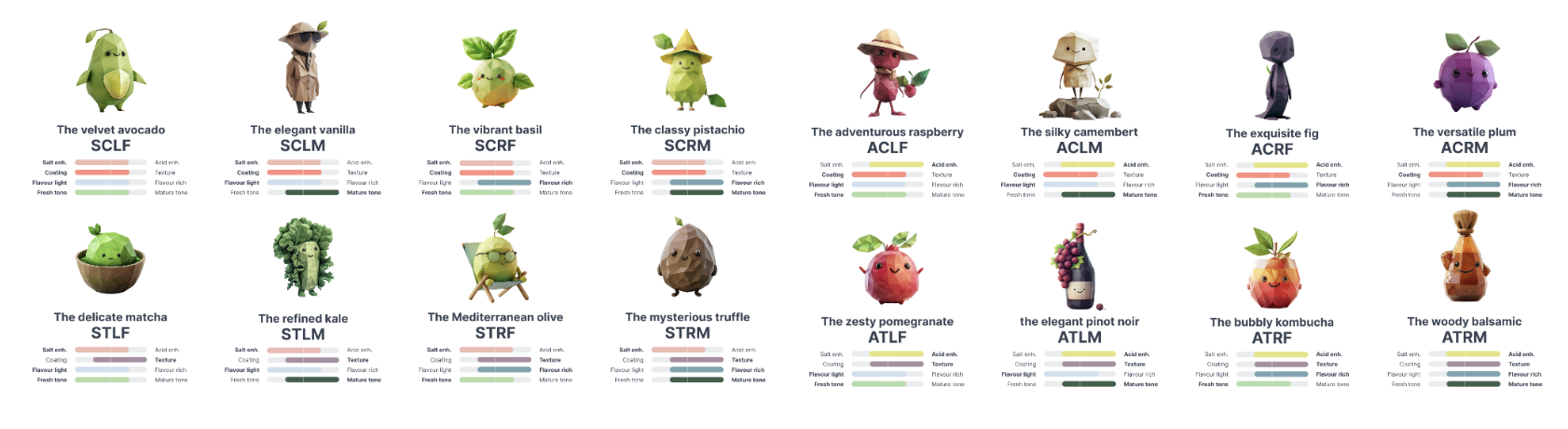
Belonging to a tribe of The Mysterious Truffle or The Trendsetter carries further in conversation than "I like savory things" ever has.
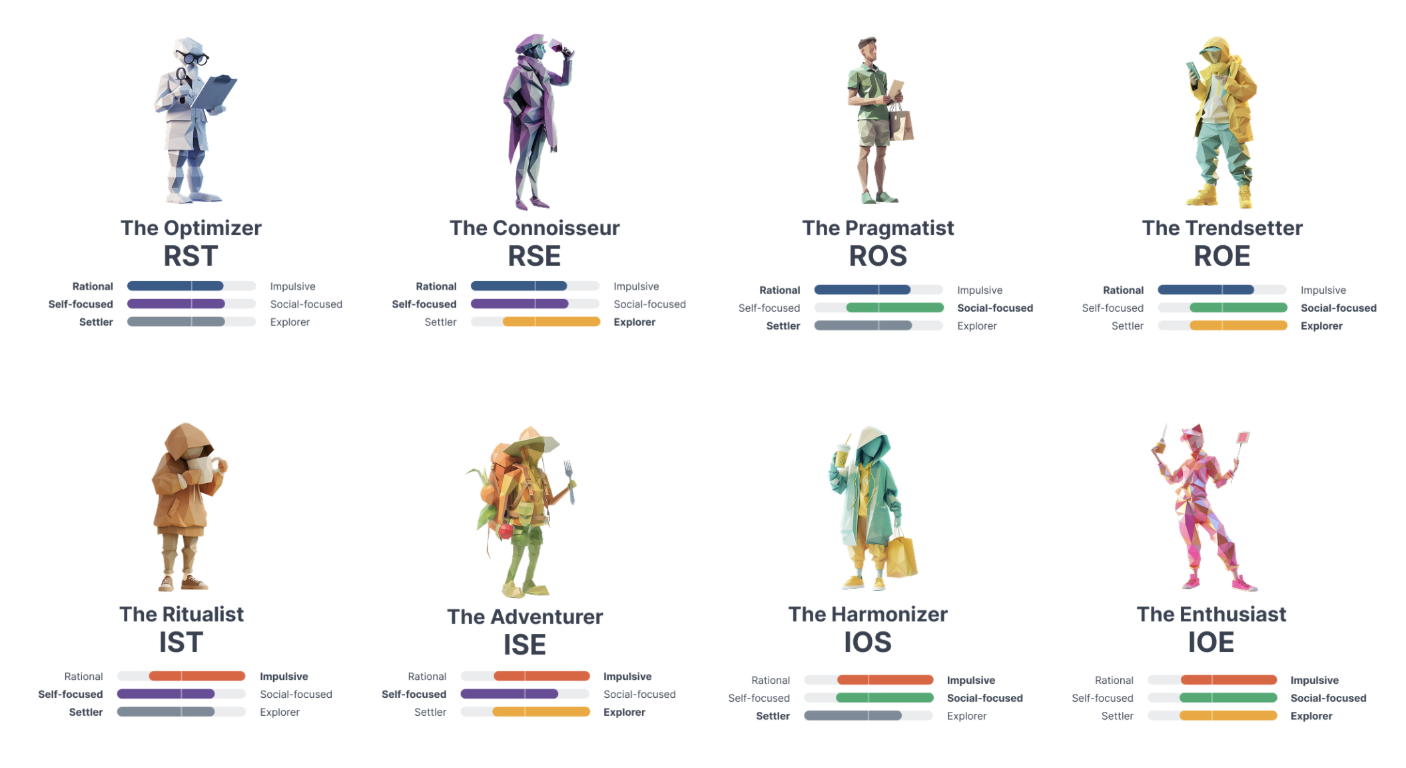
Find your tribe in twenty minutes at askyumi.com.
A new instrument
The data behind our understanding of human taste preference has been narrow in geography, limited in scale, and gathered with instruments built for the populations that created them. Those instruments have advanced the field. They simply don't travel well.
This collaboration introduces a different kind of instrument: one that transforms individual sensory experiences into population-scale scientific infrastructure. In practical terms, it begins with a single person, twenty minutes, and a richer vocabulary for describing what they perceive. Across thousands, and eventually millions, those individual experiences become something larger: a living map of human perception.
The World Taste & Smell Association is a 501(c)(3) nonprofit organization advancing sensory science through research, education, and clinical care. tasteandsmell.org
Digitaste Pte. Ltd. is a Singapore-based behavioral science company. Askyumi is its consumer-facing sensory assessment platform. askyumi.com
The 16 Taste Types and Foodie Personalities frameworks were developed by Digitaste in research collaboration with the World Taste & Smell Association. All shared research data is aggregated and anonymized. Individual profiles are not shared. For research, press, sponsorship, or collaboration inquiries, please email Mindy Yang, WTSA Co-Founder & CEO, at Mindy@TasteAndSmell.org.
