Your brain processes roughly 10,000 distinct flavor compounds. You have maybe fifteen words for them.
Language evolved to describe the visible world. It never caught up with the mouth. Linguists have documented the gap for decades: most languages contain only a few hundred words for smell and taste combined, compared to thousands for color, sound, and spatial relationships. The sensory system, performing some of the most complex discriminations in the human body, has been functioning effectively without a vocabulary.
So when you try to explain what you actually want to eat — to a partner, a restaurant, a nutritionist, yourself — you end up with "savory," "rich," "kind of umami but not in a weird way." The instruments were never built for the job.
Today, the World Taste & Smell Association (WTSA) and Singapore-based Digitaste are announcing a research partnership designed to change that — starting with the most overlooked dataset in food science: what people choose, and why.
The tool
Askyumi is a 20-minute behavioral assessment built on psychophysics and implicit association testing. It doesn't ask you to describe yourself. It shows you two dishes and records which one you choose and how fast. Forced-choice tasks and implicit association measurement capture preference data before conscious editorial processing kicks in — what you pick in under a second is a cleaner signal than anything a survey has ever produced.
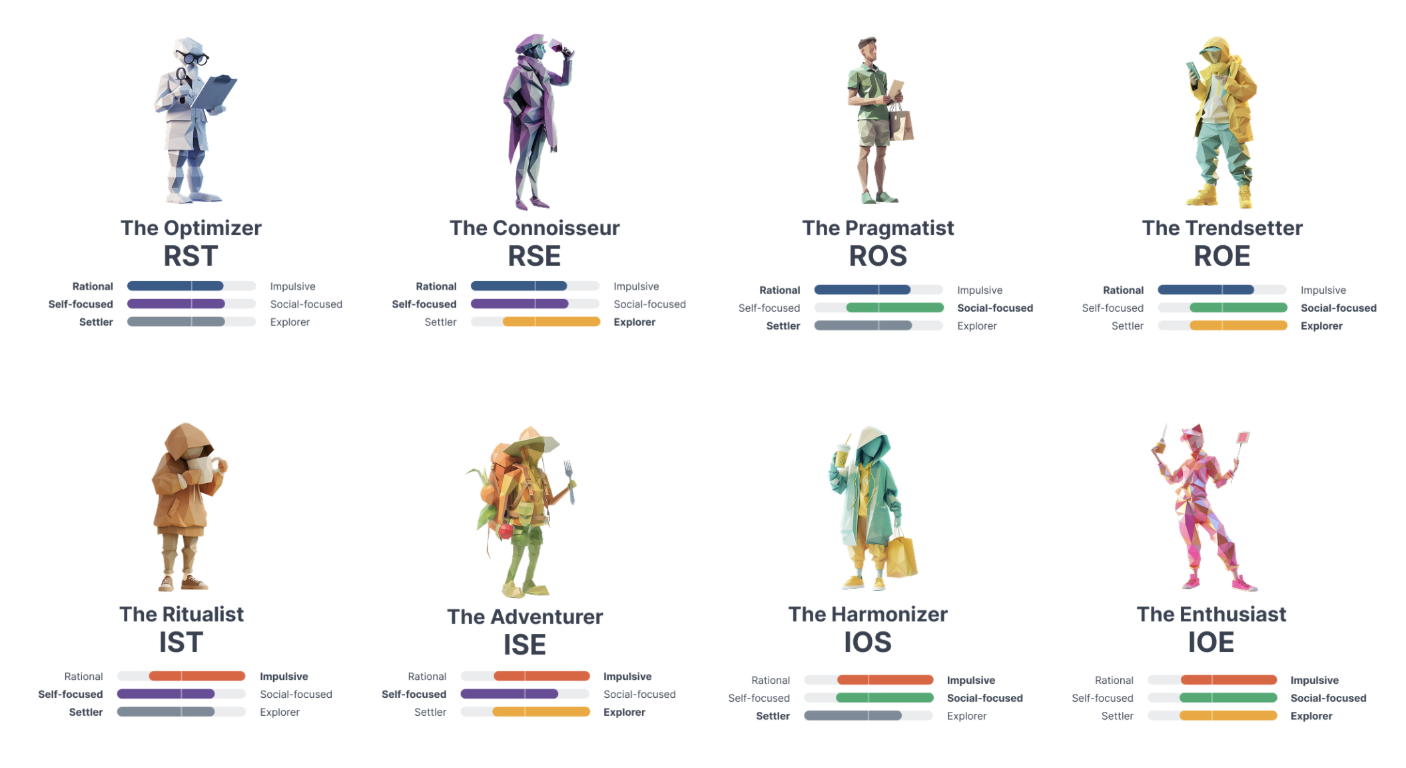
Twenty minutes generate two outputs. Your 16 Taste Type maps your biological sensory response — what your body actually prefers at the perceptual level. Your Foodie Personality maps the behavioral architecture behind how you choose food: the subconscious logic operating well below "I like spicy." Together they produce something most people have never had — a precise, written picture of their own palate, specific enough to send to someone.
Askyumi is free.
The research
Behind the consumer tool is a scientific ambition that goes considerably further.
The existing body of sensory research carries a geographic bias that has rarely been named directly. Most large-cohort studies in taste and smell perception have been conducted in North American and European populations, with instruments calibrated to those culinary contexts. Southeast Asia, East Asia, and the broader Asia-Pacific region — home to some of the most complex and differentiated food cultures on earth — remain among the least studied populations in behavioral sensory science.
The WTSA × Digitaste collaboration is designed to address that directly. At the scale that digital deployment makes possible, behavioral taste data can surface things that laboratory studies cannot: hidden preference patterns within populations assumed to be homogeneous, cross-cultural variance in flavor perception that maps onto dietary tradition and early food exposure, and the kind of ground-truth sensory profiles needed to train and validate the next generation of personalized nutrition tools and sensory digital twins.
The questions driving the research program are concrete. Do populations raised within high-umami culinary traditions exhibit measurably different preference architectures than those raised in high-acid or high-fat culinary traditions? Does cultural food environment shift the biological sensory response or primarily the behavioral pattern? What does flavor preference clustering look like when the dataset spans dozens of countries rather than one?
Large-scale cross-cultural data is the only instrument precise enough to answer them.
The clinical dimension
The data has a third application, less visible but perhaps most consequential.
An estimated tens of millions of people worldwide have lost their sense of taste or smell — through illness, injury, aging, or as a lasting effect of viral infection. For this population, sensory loss is not a nuisance; it is a clinical condition with documented effects on nutrition, mental health, and quality of life. Tracking recovery longitudinally, across large populations, with instruments sensitive enough to detect partial perceptual restoration — that has not previously been possible at scale.
WTSA's research program in perceptual recovery is one of the collaboration's core scientific commitments. The behavioral data infrastructure being built through Askyumi is designed to serve it.
What does it mean for you?
For most people, the entry point is smaller and more immediate. You finally have something precise to tell the person cooking for you — not just what you avoid, but what you actually want. A dietary approach calibrated to your real flavor profile. And the same precision about how you eat, not just what you like: whether you chase the new thing or return to what you trust, whether you order for yourself or for the table.
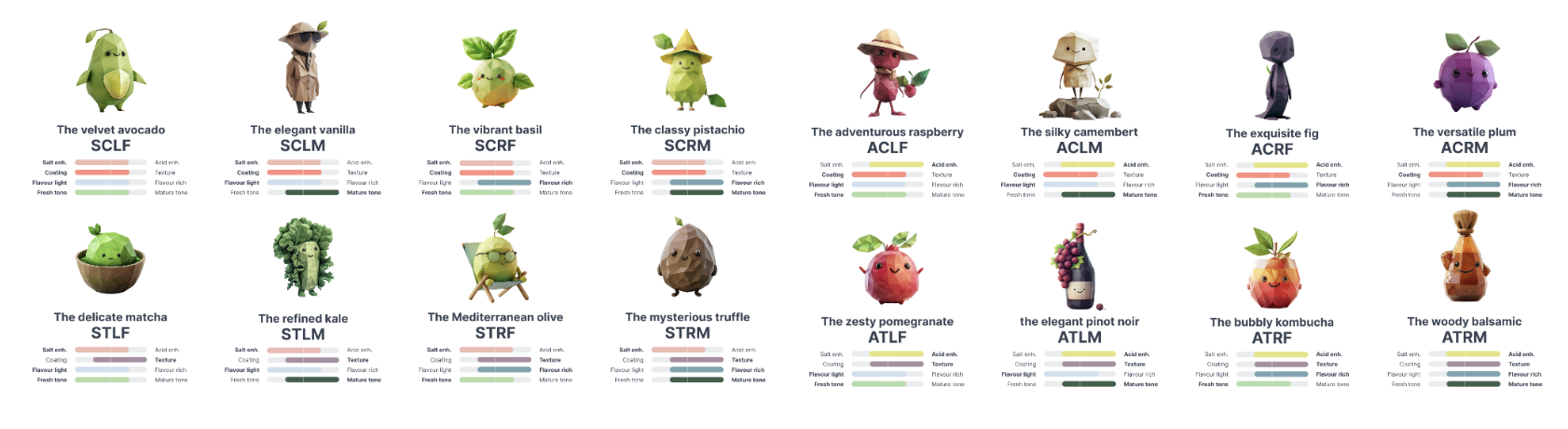
Belonging to a tribe of The Mysterious Truffle or The Trendsetter carries further in conversation than "I like savory things" ever has.
Find your tribe in twenty minutes ataskyumi.com.
A new approach for science
The sensory data that shaped our understanding of human taste preferences have been, for most of their history, narrow in geography, limited in scale, and filtered through instruments that were never adequate to the task. This collaboration is designed to change the coordinates of that problem by turning individual sensory experience into population-scale scientific infrastructure.
About the World Taste & Smell Association: WTSA is a 501(c)(3) nonprofit organization advancing sensory science through research, education, and clinical care. tasteandsmell.org
About Digitaste Digitaste Pte. Ltd. is a Singapore-based behavioral science company. Askyumi is its consumer-facing sensory assessment platform. askyumi.com
The 16 Taste Types and Foodie Personalities frameworks were developed by Digitaste in research collaboration with the World Taste & Smell Association. All shared research data is aggregated and anonymized. Individual profiles are not shared. For research, press, sponsorship, or collaboration inquiries, please email Mindy Yang, WTSA Co-Founder & CEO, at Mindy@TasteAndSmell.org.
